Business
Why we chose a one-time purchase over a subscription
Subscriptions work for many SaaS products. For an app that's part of a daily health routine, we think the one-time purchase is the more honest call.
When we scoped RemMedy in early 2026, the obvious default answer to „how do we fund this?" was a subscription. $2.99/month, $24/year, Premium unlimited. Every competitor does it this way. Google Play recommends it as the standard model. The tools are built for it. So why not?
We didn't do it anyway – and we believe it's not just the right call for us, but for most health apps. Here's the reasoning.
The problem with subscriptions for health apps
A subscription is a recurring contract. The operator's incentive is to keep that contract running as long as possible – which is fine where the value of the service compounds over time: cloud storage, CRM systems, streaming.
For a medication app, that's different. The value to the user lies in reliability of the reminder – a feature that works or doesn't. Once it's set up, nothing changes for years. Yet the user would pay every month because they can't turn the app off without losing their reminders. That's a lock-in, not a value contribution.
What happens when subscriptions dominate the market
In January 2026, Medisafe moved previously free features behind a Premium subscription. That's not a one-off: the pattern is to acquire market share with a free tier, build user lock-in, and then gradually move features into the paid plan. Short-term users don't mind. For people with a chronic condition who have used an app for years and now depend on it, it's a betrayal.
Why a one-time purchase is the more honest answer
A one-time purchase means we have to capture the value now. If someone buys RemMedy Premium, they decided the app is worth that amount – once, forever. We're not allowed to move features behind a new paywall later, because that would break the promise. Our incentive flips: instead of optimizing for longest possible billing, we have to build the app well enough that people recommend it.
In concrete terms, this is how we ship it:
- Free tier forever – 2 medications, 2 measurement types, 30-day history. For many people that's enough.
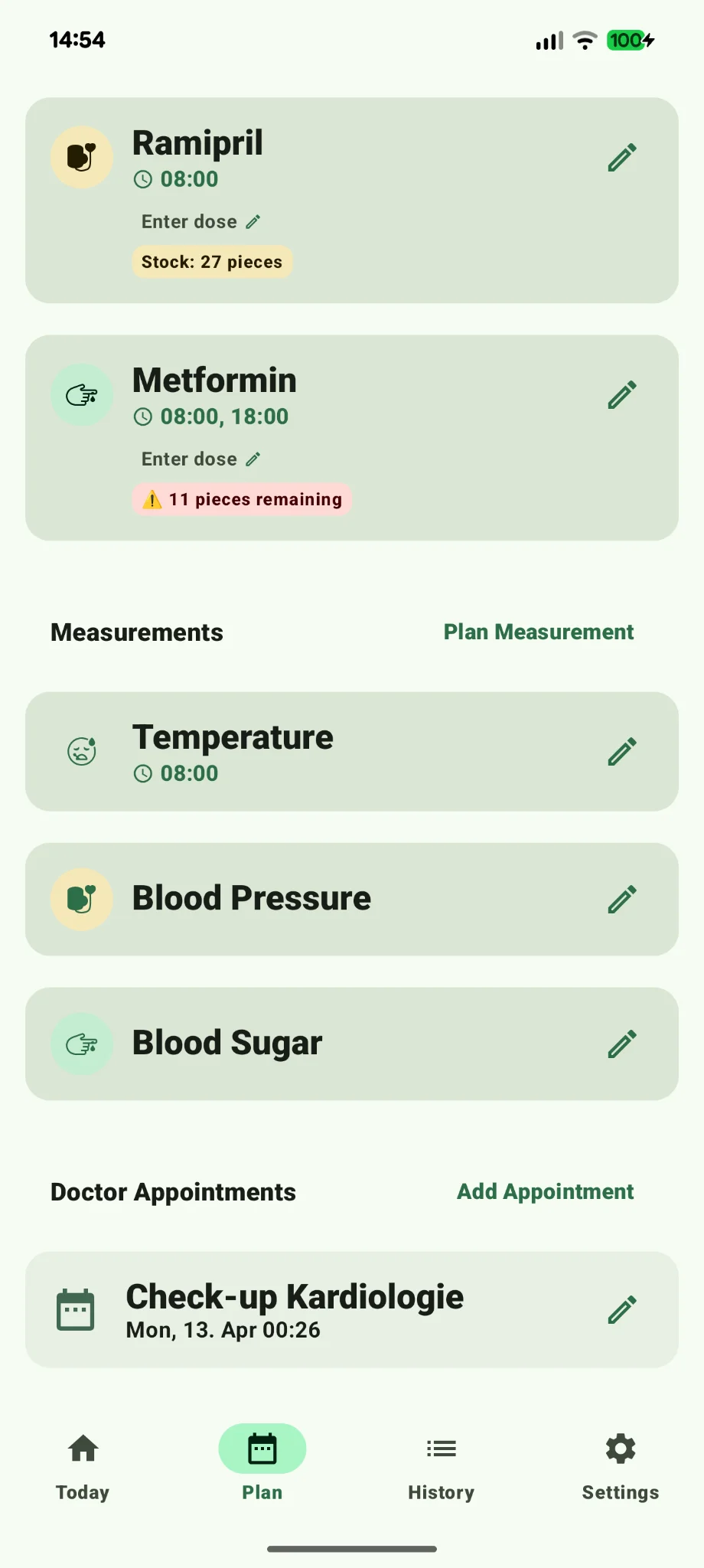
- Premium €6.99 one-time – unlimited entries, PDF export, inventory tracking, extended trend analysis.
- 7-day free trial – no auto-convert to purchase, no subscription trap.
- All future Premium features included – if you bought once, you get the new stuff too.
What this means for us
Financially, a one-time model is harder to plan around. We can't look at a cohort with clear monthly ARR. In return, the relationship with users is cleaner. Nobody feels they lose anything by just not opening the app for a week. Premium means Premium – done.
We're not saying subscriptions are always wrong. For many product categories, they're the right answer. For a health app meant to be part of a routine for as long as possible, we think a one-time, fair price is the honest offer.
Could this change in the future?
Theoretically yes. Any software company can change its business model. In practice that would be a breach of trust toward anyone who has already bought – and we'd think very hard about whether we can do it without stripping Premium features from existing buyers. If it ever comes to that, we'll announce it clearly and in advance, and previously purchased Premium will keep the features it had.
Honestly: we don't plan to. But we also don't want to give absolute „never" promises we'd later regret. That's the compromise between honesty and convenience.